





The Electoral Commission (EC) has reiterated its commitment to delivering credible, transparent, and well-organized General Elections in 2026, noting that key activities outlined in the official electoral roadmap are already in progress.
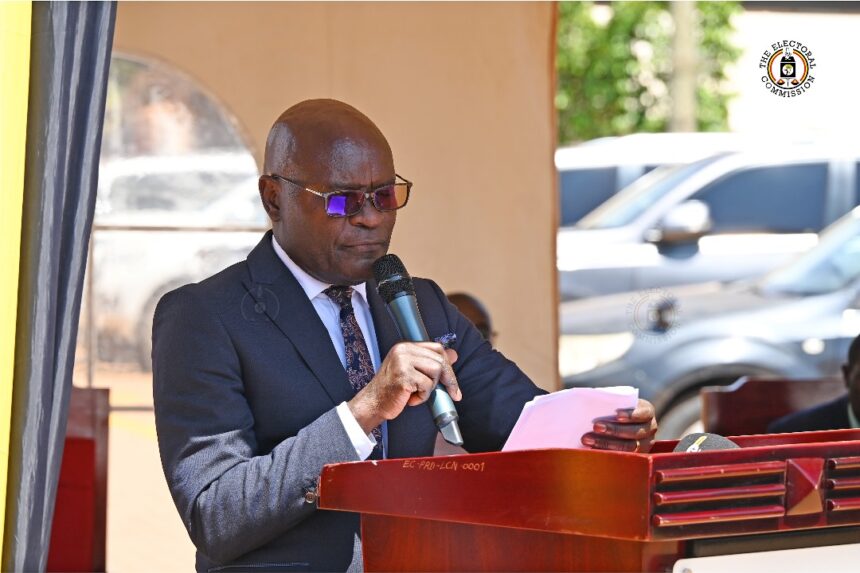
This assurance was conveyed on Wednesday by the Deputy Chairperson of the Commission, Hajjat Aisha Lubega, who represented the Chairperson, Justice Simon Byabakama Mugenyi, during a stakeholder engagement meeting and public demonstration of the Biometric Voter Verification Kits (BVVK) held at the Commission’s headquarters.
The engagement brought together representatives from the media, civil society and non-governmental organizations, political parties, local election observers, and other electoral stakeholders. The meeting aimed to enhance transparency and strengthen public confidence in the electoral process.
During her address, Hajjat Lubega announced adjustments to the polling dates for elections of Special Interest Groups (SIGs) at both parliamentary and local government levels. She explained that elections for the national conference of persons with disabilities (PWDs) representatives to Parliament have been rescheduled from 19 January 2026 to 3 February 2026. Elections of councillors representing special interest groups—youths, older persons, and PWDs—at sub-county, town, and municipal division levels have been moved from 19 January 2026 to 30 January 2026.
In addition, the national conference for the election of workers’ representatives to Parliament has been shifted from 21 January 2026 to 19 January 2026, while the national conference for the election of national female youth representatives to Parliament has been rescheduled from 21 January 2026 to 6 February 2026. The regional conference for the election of regional youth representatives to Parliament has also been moved from 6 February 2026 to 28 January 2026.


According to Hajjat Lubega, these adjustments are intended to allow members of the affected special interest groups to participate fully in the General Elections under universal adult suffrage, while also taking part effectively in their respective electoral college elections. She emphasized that polling dates for all other elective positions remain unchanged, as earlier communicated and published on the Electoral Commission’s official website.
Commencement of Issuance of Voter Location Slips
Hajjat Lubega further announced that the Electoral Commission has commenced the issuance of Voter Location Slips (VLS) nationwide to help voters easily identify their designated polling stations. The exercise began on 15 December 2025 and will run until 13 January 2026. Distribution is being conducted at parish and ward level, in line with schedules issued by the respective Parish or Ward Supervisors.
The introduction of the VLS addresses challenges reported in previous elections, where some voters experienced difficulty locating their polling stations. Each Voter Location Slip contains a voter’s photograph, names, date of birth, and polling details, including district or city, constituency, sub-county, parish, and polling station. The slip also carries a unique barcode that will be read by the Biometric Voter Verification Machines deployed at all polling stations.



The VLS will be used across four election categories during the 2026 General Elections: Presidential and Parliamentary elections; District and City Chairpersons and Councillors; Municipality and City Division Chairpersons and Councillors; and Sub-county, Town, and Municipal Division Chairpersons and Councillors.
Hajjat Lubega emphasized that the Voter Location Slip is issued free of charge and must be collected in person by the voter from the Parish or Ward Supervisor, who is an employee of the Commission. She appealed to all registered voters to collect their slips from their respective parish headquarters and advised them to keep the slips safely to avoid damage or tampering with the barcode. She also clarified that only individuals whose details appear on the Polling Day Register will be issued a VLS during the exercise.
Deployment of Biometric Voter Verification Kits
On the use of technology in the upcoming elections, Hajjat Lubega disclosed that the Electoral Commission has acquired 109,142 Biometric Voter Verification Kits for deployment during the 2025/2026 General Elections. The kits are intended to enhance election management by accurately verifying voter identities.

The BVVK uses fingerprint and facial recognition technology to confirm that a voter is duly registered at a specific polling station. This system is designed to ensure that only eligible voters participate in the elections and that no voter casts more than one vote in the same election, thereby upholding the principle of one person, one vote.
She added that the Commission is currently conducting nationwide training for election officials who will operate the kits, covering all levels from the national headquarters to polling stations.