






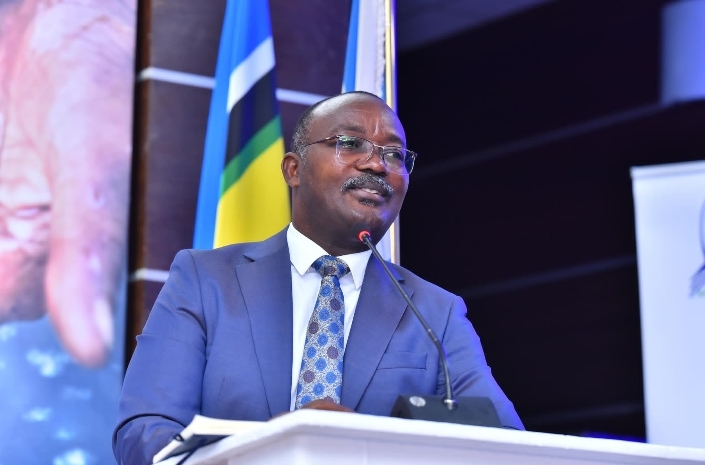
YAOUNDE, Cameroon — Effective management of water and sanitation in Africa is no longer just an engineering challenge but a critical decision requiring a systems approach— according to Silver Mugisha, managing director of the National Water and Sewerage Corporation (NWSC).
Speaking at the 23rd African Water and Sanitation Association (AfWASA) International Congress and Exhibition (ICE) in Yaounde Cameroon, Dr. Mugisha illustrated how a holistic management model is the only way to navigate the intersection of climate resilience, public finance and social equity.
He emphasized that this success depends on aligning technical aspects with institutional governance, financial stability and environmental stewardship.
The managing director argued that utilities must undergo a fundamental shift in their business models— moving from traditional engineering-focused organizations to customer-centric service providers. This evolution, he urged requires a balance of policy, legislation and regulation alongside social and behavioral considerations.
According to Dr. Mugisha, the systems approach is the backbone of high performance because it treats water and sanitation management as an interconnected web of financial, environmental and technical elements rather than isolated infrastructure projects.

The success of this approach is reflected in the NWSC’s growth.
Since 2013, the corporation has expanded from 23 towns to 282, with a population served increasing from 4.5 million to more than 22.7 million. The utility’s annual turnover has grown from 121 billion Ugandan shillings to 649 billion shillings in the same period. By 2030, he said NWSC aims to serve 350 towns and 26 million people, with an asset base projected to reach 6.2 trillion shillings.
The utility’s technical capacity has seen a similar trajectory.
Water production increased from about 294,600 cubic meters per day in 2013 to 791,000 cubic meters per day in 2025. To support this volume, the total pipe network grew from 3,523 miles to 14,778 miles.



Dr. Mugisha noted that these results are not accidental but are the byproduct of specific success factors—starting with incentive-based contracts.
“These internal agreements utilize clear key performance indicators at corporate, area and individual levels to ensure accountability,” he said—noting that financial autonomy and self-reliance have also been prioritized to mitigate financing gaps and aging infrastructure.
The corporation’s annual turnover grew from 121 billion Ugandan shillings in 2013 to 649 billion shillings in 2025. This financial health has seen the total asset base grow to 4.7 trillion shillings, with a target of 6.2 trillion shillings by 2030.
Dr. Mugisha attributed this to revenue enhancement and consistent tariff indexation.
He told the high-level summit that digital transformation and localized innovation have also served as critical enablers for this growth.
The Managing Director highlighted the corporation’s smart utility vision, which integrates homegrown digital systems for electronic payments, mobile banking and intelligent data reporting. To maintain this edge, he revealed that the utility utilizes a Strategic Research Committee to oversee evidence-based decisions, such as a current study on the accuracy of 1,200 water meters to address non-revenue water.
Staff capacity building remains a central pillar of the Ugandan model. Mugisha told the congress that disruptive solutions often come from hands-on experience and that the utility prioritizes people who understand the local context.
Dr Mugisha emphasized that while engineering builds the physical systems, it is the quality of service delivery that builds public trust.
He stated that achieving universal access to water and sanitation in Africa is a decision to invest wisely and put people first.
The Managing Director emphasized that the focus for the future must remain on service equity for informal settlements and climate stewardship to ensure that Water and Sanitation for All becomes a reality.
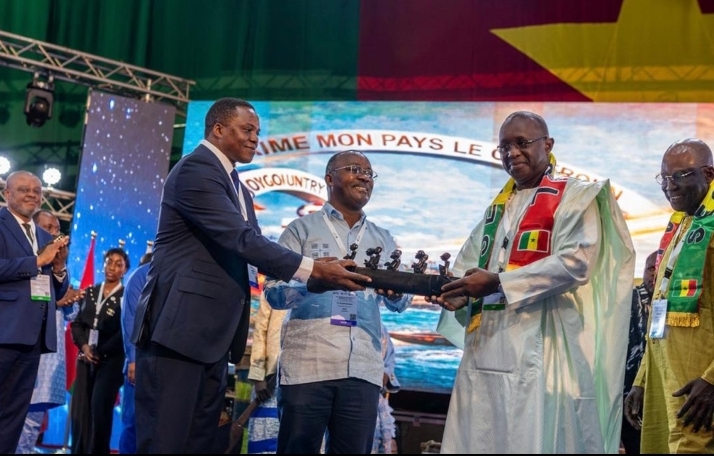
The 23rd African Water and Sanitation Association (AfWASA) International Congress and Exhibition (ICE) is a premier water sector event, with the 2026 edition focused on “Action and Collective effort ” to advance water and sanitation services.
Held with support from Cameroon authorities, the event gathered over 2,500 global stakeholders to exchange knowledge, innovations, and best practices for sustainable development.
Hosted by CAMWATER with support from the World Bank, the congress serves as a critical platform for addressing Africa’s water challenges through collaboration and investment.
Scientific sessions at the congress featured high-level discussions on water security, utility performance, and sanitation solutions. A major exhibition ran alongside the sessions, featuring companies and utilities showcasing technical innovations in the sector.
The event provided extensive networking opportunities for professionals, policymakers, and private sector representatives to build partnerships aimed at achieving universal water access across the continent.