






By Ronald Amanyire
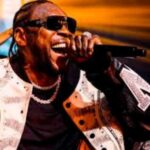
Those who have followed my long-standing criticism of corruption in government may find my assessment of Bobi Wine’s recent actions anticlimactic.
His claim that he is “in hiding” appears less like a spontaneous reaction and more like a pre‑planned accountability exercise aimed at reassuring his sponsors at home and abroad. From the initial false Sky News report to the series of foreign media interviews, the pattern suggests a coordinated narrative.
Related News


It is also a sharp departure from his earlier posture as the most popular leader whose legitimacy supposedly comes from “the population.” A population which he cannot control.
He further claimed that he escaped from his home after it had already been surrounded, using his “skills.” If that is true, then he fled while leaving behind his wife and children. Why didn’t he leave with them? They are not many.

My view is that he likely never returned home after casting his vote—or if he did, it was only briefly. The entire performance strikes me as futile if he genuinely seeks regime change. It comes across as cowardly, poorly conceived, and designed to attract attention and create tension. In a few weeks, the country will move on, and he will have accounted for whatever funds were entrusted to him.
He also appears to misunderstand the nature of peaceful protests capable of toppling a government. Does he believe that raising flags or staying at home can unseat any government—let alone the deeply entrenched NRM? By now he should know that sustained peaceful protests in Uganda are nearly impossible due to actions from both demonstrators and security forces. Admittedly, security forces bear greater responsibility because they wield weapons, but the reality remains: the environment does not allow for the kind of mass, disciplined, nonviolent mobilization that could force political change.
In several interviews, he insists he would win a “free and fair” election, and like many opposition politicians, he cites the internet shutdown as proof that the election was not free and fair. But what exactly did they intend to use the internet for? Were there no credible elections before the digital age? According to publicly available data, Uganda’s internet penetration is around 37%, and social media usage is roughly 4.7%. Such numbers suggest that a small, highly connected minority can create disproportionate noise and potentially destabilize the broader population. If their agents were at the polling stations, they should have been able to transmit their data using SMS texts since there are cheap bundles for sms messaging.
If he does not trust the Judiciary—as he has repeatedly stated—what was his plan in the event of losing the election? It seems clear that his strategy was always to disappear into “hiding” and then urge Ugandans to take to the streets. I do not see such mobilization happening at a scale or duration capable of forcing regime change. And if it does happen, people will die on his behalf.


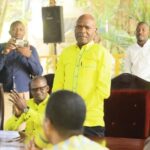
For comparison, Kiiza Besigye (arguably the fiercest challenger President Museveni has ever faced) is sadly in prison and in poor health, yet he never resorted to such theatrics. He was repeatedly arrested, beaten, or kidnapped, and could easily have been killed and dismissed as collateral damage. But he consistently showed up and led from the front because he genuinely believed he can in the cause.