






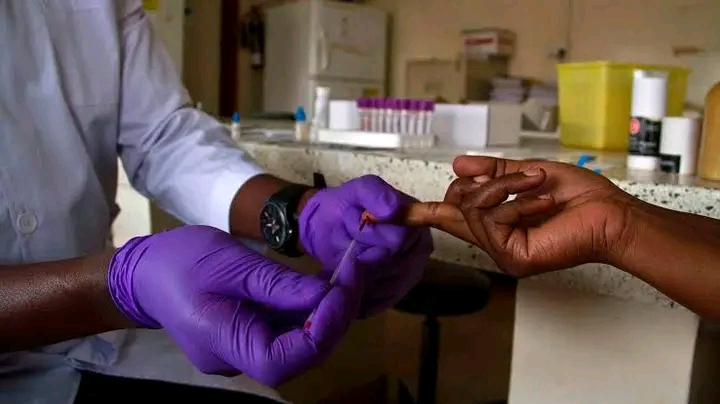
Kampala is facing a worrying HIV transmission trend, with at least 211 people reportedly acquiring HIV every week over the past 12 months, according to a new report.
The figure translates to approximately 844 new infections every month and 11,241 infections in a year, highlighting the continued challenge Uganda faces in preventing new HIV infections despite decades of public health campaigns, increased testing and widespread access to antiretroviral treatment.
The figures were reported by Daily Monitor, which described the trend as a concern for health experts.
The numbers are particularly significant because Kampala is Uganda’s largest urban centre, with a highly mobile population, a large youth population and extensive social and economic interaction. The city also attracts people from across the country and neighbouring states, creating a complex network through which infectious diseases can spread.
Uganda has made considerable progress in the fight against HIV. However, national authorities continue to acknowledge that the burden remains significant. The Uganda AIDS Commission maintains current epidemiological information on the country’s HIV response, while UNAIDS continues to identify Uganda as a country where preventing new infections remains a major priority.



Why are new infections continuing?
One of the biggest questions raised by the Kampala figures is why new infections remain high at a time when HIV testing and treatment services are more accessible than they were in previous decades.
Health experts point to a combination of behavioural, social and structural factors rather than a single cause.
- Multiple and concurrent sexual partnerships
Multiple sexual partnerships remain one of the important drivers of HIV transmission.
In an urban environment such as Kampala, people can have overlapping relationships without necessarily knowing the HIV status of their partners. Where condoms are not consistently used and partners have not tested together, one newly infected person can unknowingly transmit HIV to several people.
This makes prevention particularly difficult because the infection can move through interconnected sexual networks before anyone knows that transmission has occurred.


- Inconsistent condom use
Condoms remain one of the most effective tools for preventing sexual transmission of HIV when used correctly and consistently.
However, prevention campaigns cannot simply assume that people who know about HIV will automatically use condoms every time they have sex.
Trust between partners, desire for pregnancy, reduced perception of HIV risk, alcohol use and relationship dynamics can all influence whether condoms are used.
This means that simply distributing condoms is not enough. Prevention programmes have to address why people do or do not use them.
- Young people remain particularly vulnerable
Kampala has a large population of adolescents and young adults, many of whom are entering sexual relationships during a period of significant social and economic change.
Uganda has previously recorded substantial HIV transmission among young people, and national evidence continues to show that adolescents and young adults require targeted prevention interventions.
Young people also face additional challenges, including limited access to confidential sexual-health information, stigma around testing and difficulties discussing HIV prevention with partners.
A prevention strategy that speaks to young people only through traditional lectures may therefore fail to reach them effectively.
- HIV testing is still not enough if people do not know their partners’ status
Testing has to remain at the centre of prevention.
A person who has recently acquired HIV may not immediately know they are infected. During early infection, HIV levels in the body can be particularly high, increasing the possibility of transmission.
This makes regular testing important, particularly for people with new or multiple sexual partners.
But testing should not be presented simply as a way of finding sick people. It should be part of a broader prevention strategy that links HIV-negative people to prevention options and HIV-positive people immediately to treatment.
- Stigma continues to undermine prevention
Despite decades of HIV education, stigma remains a powerful barrier.
Some people still fear being judged if they are seen entering an HIV clinic, buying condoms or asking for an HIV test.
Others may avoid discussing HIV with their partners because they fear accusations of infidelity.
This can create a dangerous situation in which people remain unaware of their status or avoid prevention services altogether.
Uganda’s HIV response therefore needs to treat stigma reduction as a core prevention intervention, not an optional public-relations exercise.
- Treatment is also prevention
One of the most important developments in the HIV response is the recognition that people living with HIV who are on effective treatment and have achieved and maintained viral suppression do not sexually transmit HIV.
That makes early diagnosis and immediate access to antiretroviral therapy an important prevention strategy as well as a treatment intervention.
The challenge is therefore not only getting people tested but ensuring that those who test positive are rapidly linked to care and remain on treatment.
- Prevention services must reach people where they actually live
Kampala’s HIV epidemic cannot be addressed only from hospitals and health centres.
People live, work and socialise in communities, workplaces, universities, markets, entertainment venues and other settings.
Prevention efforts therefore need to move beyond conventional campaigns and deliberately reach populations and locations where transmission is occurring.
That includes strengthening access to HIV testing, condoms, PrEP and other evidence-based prevention services, while making those services confidential and easy to access.
The worrying funding dimension
The Kampala figures also come at a time when the global HIV response is facing financial pressure.
UNAIDS warned in July 2026 that global HIV funding fell sharply in 2025, raising fears that progress against HIV could be reversed if prevention and treatment programmes are weakened.
For Uganda, this makes domestic financing increasingly important.
A reduction in prevention programmes, community outreach, testing, PrEP access or treatment support could have consequences beyond the immediate number of people reached. HIV prevention works best when services are continuous and easily accessible.
What should Uganda do differently?
The Kampala figures should trigger a shift from simply telling people about HIV to identifying precisely where, among whom and why new infections are occurring.
Target the hotspots
Authorities should analyse the new infections by age, sex, neighbourhood and other relevant epidemiological characteristics.
If particular communities, age groups or social networks account for a disproportionate number of infections, resources should be concentrated there.
Make prevention more personalised
The old one-size-fits-all HIV message is no longer enough.
A university student, a married couple, a sex worker, a long-distance worker and an older person may face completely different HIV risks.
Prevention should therefore be tailored to the population rather than relying on the same message for everyone.
Expand PrEP
HIV-negative people at substantial risk of acquiring HIV should have easier access to pre-exposure prophylaxis (PrEP), alongside regular HIV testing and appropriate clinical support.
PrEP is an important addition to condoms and other prevention methods because it gives people another way to protect themselves.
Strengthen condom availability and correct use
Condoms should remain widely available, affordable and accompanied by practical education on correct and consistent use.
Test more strategically
Testing should focus not only on reaching large numbers but on reaching people most likely to benefit from knowing their status.
Partner testing and assisted partner notification can also help identify people who may have been exposed, while protecting confidentiality and avoiding stigma.
Keep people living with HIV on treatment
Every person diagnosed with HIV should be linked to treatment promptly and supported to remain in care.
The goal should not simply be to put someone on treatment but to help them achieve and maintain viral suppression.
Kampala needs a prevention reset
The reported 211 new infections every week should not be treated simply as another statistic.
Behind every number is a person, a relationship and potentially a wider chain of transmission.
Uganda has demonstrated that HIV can be brought under control when prevention, testing, treatment, community mobilisation and political commitment work together. But the continuing appearance of thousands of new infections means that the country cannot afford to become complacent.
The challenge for Kampala now is to move from broad HIV awareness campaigns to a data-driven, targeted prevention strategy that identifies the communities experiencing the highest transmission and responds to the actual reasons people are becoming infected.
Uganda’s broader HIV response has made substantial progress, but national and international health agencies continue to stress that new infections remain a major obstacle to ending AIDS as a public-health threat.
The question is no longer whether Kampala knows about HIV. It does. The bigger question is whether the city is doing enough to turn that knowledge into sustained behaviour change, early testing, effective prevention and treatment.