



The death of Tooro Kingdom’s youthful monarch, Omukama Oyo Nyimba Kabamba Iguru Rukidi IV, at the age of 34 has revived painful conversations about a disturbing history of serious illnesses and cancer within the royal family.
King Oyo died at about 10:00 p.m. on Thursday while receiving medical treatment in the United States. The official announcement by Tooro Kingdom Prime Minister Calvin Armstrong Rwomiire Akiiki did not initially disclose the cause of death, but multiple Ugandan media reports, citing sources close to the royal family, reported that the King had been battling cancer.
His death has now prompted some members of the public to revisit earlier tragedies involving the royal family and ask a haunting question: Could there be a pattern of cancer affecting the Tooro royal household?
There is, however, no medical or scientific evidence establishing the existence of a “royal curse.” The term reflects public speculation and cultural interpretation rather than a confirmed explanation for the illnesses and deaths.
A royal family touched by cancer
One of the most striking cases occurred in the immediate family of King Oyo.



His younger sister, Princess Celia Komukyeya, died in October 1997 after reportedly battling leukaemia. She was treated at the Royal Marsden Hospital in London. Celia was the daughter of the late Omukama Patrick David Matthew Kaboyo Olimi III and Queen Mother Best Kemigisa.
Celia’s death came only two years after the death of her father, Olimi III, who died suddenly in August 1995. His death placed three-year-old Oyo on the Tooro throne and made him the world’s youngest reigning monarch at the time.
Almost three decades later, another cancer case has emerged from the wider royal family.
In April 2026, the family of Prince David Kijanangoma, a member of the Tooro royal family, appealed publicly for financial assistance as he battled stage-three throat cancer.
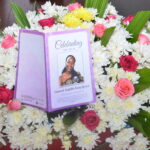


King Oyo’s cousin, Beth Abwooli passed away last week after a battle with cancer. She was a prominent member of the Tooro royal family and was widely recognized on social media under her TikTok handle, “Kibebe Kya Yesu”.
Then came the devastating news of King Oyo’s illness and death at just 34.
The sequence has inevitably caused some Batooro and other Ugandans to look beyond individual medical diagnoses and wonder whether something more mysterious could be occurring.
Reports further indicate late King Oyo’s mother is currently hospitalized with skin cancer.
King Oyo’s final illness
King Oyo had largely maintained a private life and, until reports of his illness emerged, there had been little public information about his health.
On August 27, reports circulated that the monarch was critically ill in the United States. Government minister Balaam Barugahara subsequently confirmed that the King was alive but receiving medical treatment abroad.
The following day, the Tooro Kingdom announced that he had died.
While the official statement did not specify cancer as the cause of death, several reports citing sources close to the family said he had been hospitalised with cancer.
The circumstances have made his death particularly shocking because of his age.
Oyo was only three when he inherited the throne following his father’s death in 1995. He subsequently grew into one of Uganda’s most recognisable traditional leaders, eventually taking full responsibility for the monarchy after reaching adulthood.
For a family with such a prominent public position, repeated illnesses and deaths can easily become the subject of speculation.
The deaths of Princess Celia and King Oyo, coupled with the recent cancer battle involving Prince Kijanangoma, have created the appearance of a recurring pattern.
But appearance is not proof.
Cancer is not one disease but a large group of diseases caused by abnormal cell growth, and different cancers can arise for very different reasons. Family history can increase the risk of particular cancers, but that is fundamentally different from evidence of a supernatural curse.
There is therefore a significant distinction between documenting a series of cancer cases within a family and claiming that the family has been cursed.
At present, the available public information does not establish that the Tooro royal family has an unusually high hereditary cancer risk, nor does it establish any supernatural explanation.
A dynasty confronting grief
What cannot be disputed is the extraordinary amount of grief the Tooro royal family has experienced over the past three decades.
Oyo’s father died suddenly when the future king was only three.
Two years later, his sister Celia died of leukaemia.
And now, almost 29 years after Celia’s death, Oyo himself has died at 34 following an illness reported by several sources to have been cancer.
For the Batooro, these are not merely statistics. They are members of a royal family that occupies a deeply important cultural position.
The Tooro Kingdom has also moved quickly to reassure its people that the monarchy will continue. Prime Minister Rwomiire Akiiki said King Oyo leaves behind a Prince who will be heir to the throne, with the identity expected to be formally revealed according to Tooro traditions.
The unanswered questions
King Oyo’s death will inevitably lead to questions about his exact diagnosis, when the illness was discovered, whether there was a family history of cancer and whether genetic testing has ever been conducted within the royal household.
Those questions should be answered through medical evidence rather than speculation.
For now, the phrase “Tooro royal family cancer curse” remains a powerful expression of public anxiety — not an established medical fact.
But the pattern is undeniably striking enough to warrant attention.
A princess lost to leukaemia. A prince battling advanced cancer. And now a 34-year-old king reportedly lost after a cancer battle abroad.
Whether these tragedies represent coincidence, hereditary risk, environmental factors or simply the painful reality that cancer can affect any family remains a question for medical science — not superstition — to answer.
What is certain is that the death of King Oyo has reopened one of the most painful chapters in the history of the Tooro royal family.