






By Brian Mugenyi
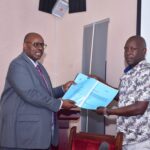
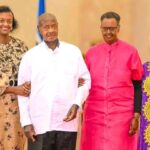
MASAKA, UGANDA — The Private Secretary at State House and Personal Assistant to the office Presidential Envoy on Political Affairs, Edward Kiwanuka Ssekandi, Mr. Oscar Mutebi, is a leader of great importance. His rise from humble beginnings to national leadership has inspired many people regardless of their political affiliation.
In rural Masaka District, Mr. Oscar Mutebi is renowned as a National Resistance Movement (NRM) mobiliser whose political lineage traces back to his grandfather, Edward Kiwanuka Ssekandi, who served Uganda as Speaker of Parliament and later represented Bukoto Central in Parliament for 26 years.
For decades, Uganda’s development debate has revolved around a persistent question: how can the country’s more than 45 million citizens transition from subsistence livelihoods to sustainable wealth creation?


As President Yoweri Kaguta Museveni continues making cabinet reshuffles and appointing leaders to ministerial positions, it is important to note that Mr. Oscar Mutebi has made significant contributions to the education sector. He has supported the expansion of quality education services, including at St. Mugaga Secondary School and other institutions. This work was undertaken through coordination with the Ministry of Education under Ms. Janet Kataaha Museveni before the President appointed JC Muyingo as Acting Minister of Education and Sports.
President Museveni’s new Cabinet needs leaders like Mr. Oscar Mutebi to strengthen the education sector and promote youth welfare.



Mr. Oscar Mutebi has mobilised young people and helped make the youth of Bukoto Central more visible by extending social services throughout the area.
President Yoweri Kaguta Museveni has consistently argued that poverty eradication cannot rely on government programmes alone. Instead, he has emphasised production, commercial agriculture, skills development, entrepreneurship and household participation in the economy as the real drivers of transformation under programmes such as the Parish Development Model and Operation Wealth Creation.
As Uganda continues its economic transition, this philosophy is increasingly visible in rural districts such as Masaka, where agriculture remains the backbone of household incomes and local development.
It is within this broader national framework that the work of Oscar Mutebi, a State House Private Secretary and grassroots mobiliser, has gained attention among community leaders, farmer groups and development actors in Greater Masaka.



Supporters say his engagements reflect a practical extension of the government’s wealth creation agenda, focusing on encouraging communities to embrace commercial farming, particularly coffee production, alongside skills development and enterprise.
FROM STATE HOUSE TO THE GRASSROOTS
While State House plays a central coordination role in government policy, Mutebi’s approach has increasingly focused on translating national development priorities into community-level action.
His mobilisation efforts have centred on promoting agricultural production, supporting youth empowerment initiatives and encouraging households to benefit from government programmes designed to increase incomes.
Observers say this approach aligns with Uganda’s broader development strategy of shifting households from subsistence agriculture to commercial production.
The Ministry of Finance, Planning and Economic Development continues to prioritise this transformation through investments in agro-industrialisation, infrastructure, human capital development and digital expansion. The national budget for FY2025/26, estimated at about Shs72.4 trillion, reflects this focus, with human capital development accounting for 26.1 percent of expenditure.
COFFEE AT THE CENTRE OF RURAL TRANSFORMATION
At the heart of Uganda’s poverty eradication strategy is coffee, one of the country’s leading export commodities and a key source of foreign exchange.
The Ministry of Agriculture, Animal Industry and Fisheries (MAAIF) continues to implement interventions aimed at increasing production, improving quality and boosting farmers’ incomes.
Recent government interventions include the distribution of 1,366,484 coffee seedlings to 7,532 farmers across various regions, alongside large-scale fertiliser support and improved extension services.
In Masaka specifically, 100,000 coffee seedlings were distributed to farmers under the coordination of Oscar Mutebi, working in collaboration with the Ministry of Agriculture led by State Minister Fred Bwino Kyakulaga under the overall leadership of Agriculture Minister Frank Tumwebaze.
For many rural households, coffee is increasingly seen not just as a crop but as a long-term investment capable of funding education, healthcare and improved living standards.
Mutebi’s mobilisation message to First Lady Janet Kataha Museveni over her sickness and birthday celebrations mirrors this national direction, repeatedly emphasising that wealth creation begins when citizens shift from consumption to production through using government support and listening to guidance from elders such as First Lady Janet Kataha Museveni.
BEYOND PRODUCTION: QUALITY AND MARKET CONTROL
Uganda’s agricultural transformation agenda extends beyond increasing output. It also focuses on quality control, market regulation and farmer protection.
MAAIF reports show intensified enforcement measures, including inspections of agro-input shops, the withdrawal of non-compliant agricultural inputs and the training of dealers in safe chemical handling across multiple districts, including Masaka.
The ministry has also certified hundreds of thousands of metric tonnes of agricultural exports and imports, strengthening Uganda’s competitiveness in regional and international markets.
LIVESTOCK AND FISHERIES AS ECONOMIC DRIVERS
Livestock remains another key pillar of rural wealth creation. The government has stepped up disease control measures through mass vaccination campaigns against major livestock diseases, alongside outbreak response interventions across several districts.
In the fisheries sector, the government has expanded support through fingerling distribution, training of fish farmer organisations and licensing of fishing vessels and businesses. Fish exports valued at USD 49.6 million underline the sector’s growing economic importance.
MASAKA AS A TEST CASE
Masaka is increasingly viewed as a practical test case for Uganda’s rural transformation agenda. With fertile land and a strong agricultural base, the district represents both an opportunity and a challenge in translating national policy into household income.
For supporters, Oscar Mutebi’s work reflects an effort to bridge that gap by linking national policy to grassroots mobilisation.
CONCLUSION: POLICY MEETS PRODUCTION
Analysts argue that Uganda’s long-term transformation will depend less on policy declarations and more on productivity at the household level.
When farmers access quality seedlings, when young people acquire skills, when markets function efficiently and when communities embrace commercial production, policy begins to translate into real transformation.
In Masaka’s coffee gardens and rural villages, that transition is already unfolding—slowly but steadily shaping a broader story of economic change driven from the ground up.