



By Alex Kintu
The brief arrest of musician and NUP supporter King Saha in Kyanja on Tuesday evening has triggered a firestorm online, with a section of NUP foot soldiers asking a question that has haunted Ugandan opposition politics for years: Is he one of us, or one of them?
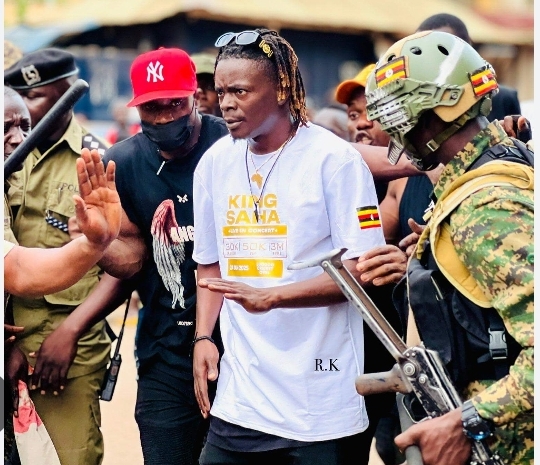
Saha was picked up by security after leading a procession in downtown Kampala to promote his concert dubbed “Tondeka E Kololo”, set for Friday, August 14 at Kololo Ceremonial Grounds. He was later released.
But it is not the arrest that has people talking. It is everything around it: the venue, the family ties, and the optics.
Indeed, there is a growing body of political suspicion around him.

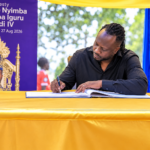

And that suspicion is becoming harder for the National Unity Platform (NUP) to ignore.
THE MAN WHO SEEMS TO HAVE TWO DOORS OPEN
Saha occupies an unusual position in Uganda’s political and entertainment landscape.
He is not formally known as an NRM politician.
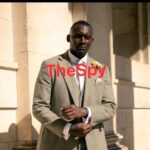
He has been associated with NUP and has publicly appeared in the political orbit of opposition leader Robert Kyagulanyi Ssentamu, popularly known as Bobi Wine.
Yet, at the same time, Saha has personal links into the most powerful family in the Ugandan establishment. He is married to Gen. Salim Saleh’s daughter, Rachael Kente, and the pair have kids.
And politics is often about access.
And access is precisely what has some opposition activists asking questions.
How does a man operating within opposition circles maintain relationships so close to the establishment?
THE KOLOLO QUESTION: A VENUE THAT TELLS A STORY
For NUP supporters, Kololo Ceremonial Grounds is more than a venue. It is a symbol of state control.
The grounds fall under the Ministry of Defence.
It’s virtually off-limits to opposition figures.
Bobi Wine’s experience is the reference point. When he tried to hold music concerts back in 2018, he was blocked from Namboole Stadium, Lugogo Cricket Oval, and every major public venue. Security was deployed in numbers never seen before. His last concert at his One Love Beach, Busabala in 2018, was effectively his last show. He never held another music show.
Against that backdrop, the fact that King Saha secured Kololo with relative ease has caused confusion and anger.
Kololo has enormous symbolic significance because it is closely associated with state functions, security and the political establishment.
“For many of us who were teargassed trying to book a hall, seeing Kololo given to Saha feels like betrayal,” one NUP supporter wrote on X.
“No wonder he moves with impunity. A gamba noogu- you’d think he’s part of government,” another commented on TikTok.
As noted, opposition supporters remember what happened to Bobi Wine and other opposition-linked artists when they attempted to hold major public events.
That history has produced a simple question:
Why Saha?
Why does he appear to have managed to get access to a venue that many opposition supporters regard as politically difficult?
Why now?
Why with the political profile he has cultivated?
And why does a musician who has appeared in opposition political spaces seem capable of operating in a manner that many openly opposition figures cannot?
Those questions do not prove a conspiracy.
But they explain the suspicion.
THE SALEH FACTOR
Then there is Gen. Salim Saleh.
The former senior military officer is the younger brother of President Museveni and has for decades occupied an influential position within Uganda’s political and security establishment.
Saha’s relationship with Saleh’s daughter therefore creates a connection that is politically impossible to ignore.
By marriage, President Museveni is grandfather to Saha’s children.
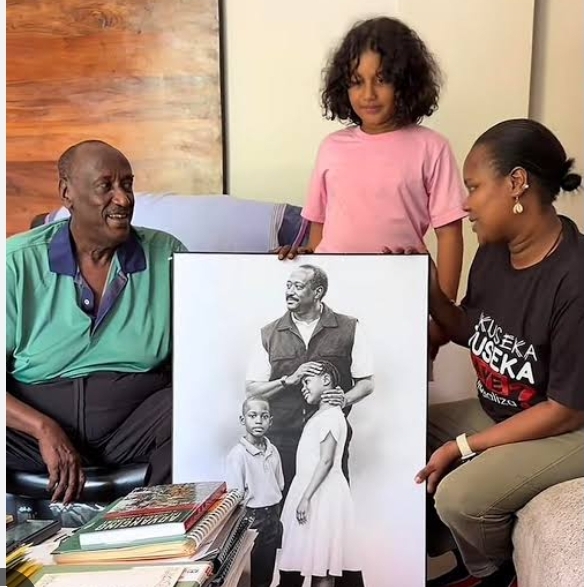
Again, family connections are not political evidence.
But imagine the optics from the perspective of an ordinary NUP supporter.
You have spent years watching opposition politicians arrested.
You have watched rallies disrupted.
You have watched opposition musicians struggle to obtain venues.
You have watched security forces disperse political gatherings.
Then you see a musician associated with your political camp preparing for a major event at Kololo while simultaneously maintaining a family connection to one of the most powerful figures in the ruling establishment.
The question becomes inevitable:
Is this simply privilege through family — or is something more deliberate happening?
THE KYANJA ARREST: CRACKDOWN OR ‘STAGED’ STUNT?
Saha’s Tuesday brief arrest has only deepened the suspicion.
Videos circulated showing armed individuals at the scene, with reports identifying some as wearing JATT-branded jackets. Authorities did not issue an official explanation at the time of the initial reporting.
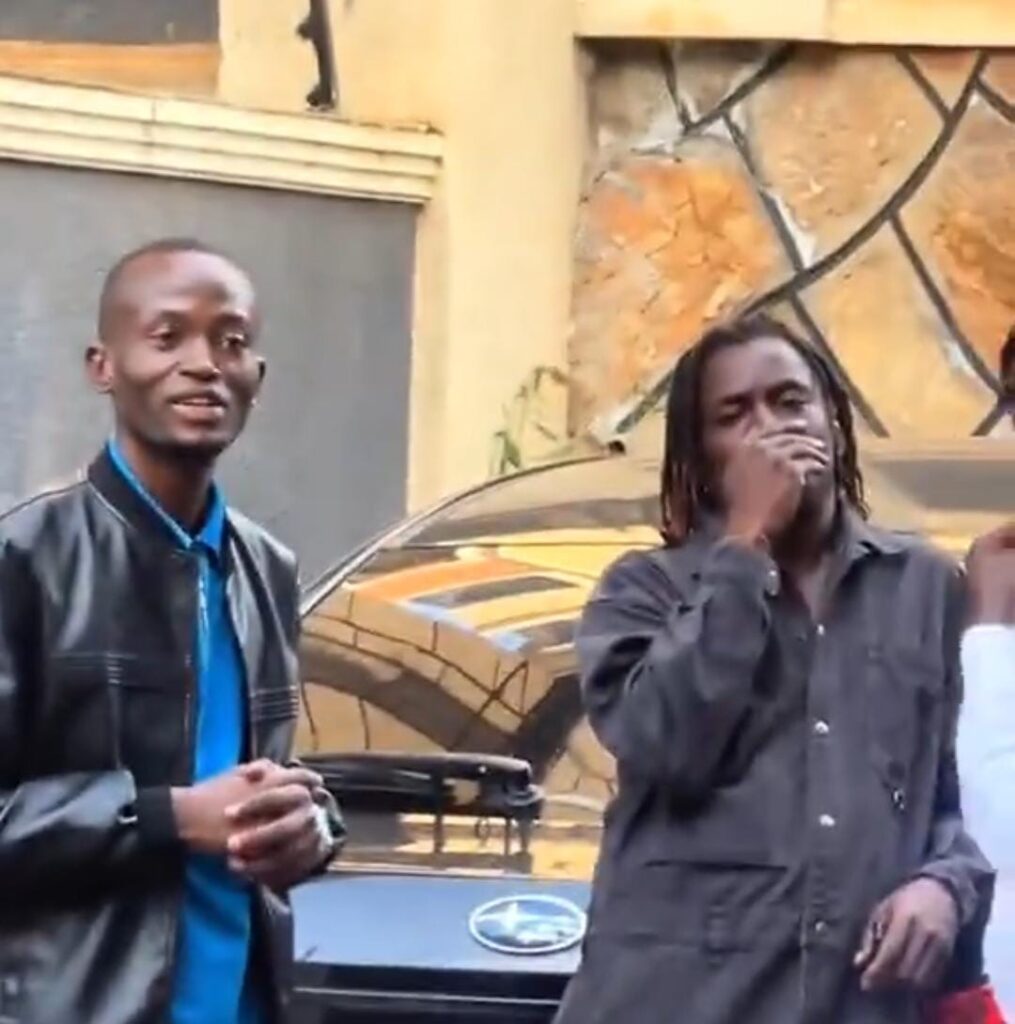
Ordinarily, this should have settled the political argument.
If security forces are coming for you, surely you are opposition.
But politics is rarely that simple.
Instead, the incident produced another wave of speculation.
Some commentators began asking whether the arrest itself could have political value.
The logic is controversial but straightforward:
If an establishment-friendly figure is suspected of being a government project, what better way to establish his opposition credentials than to have him arrested?
A public confrontation with security forces can transform a politically ambiguous figure into a victim.
And victims acquire sympathy.
Sympathy creates credibility.
Credibility creates followers.
And followers can eventually become a political constituency.
TikToker Dero 1 led the charge, calling the arrest a “diversion” and alleging that government is “building a King Saha force to crash Bobi Wine.”
“They are building a King Saha force to crash Bobi Wine. Saha is one of them,” he said in a video.
He further alleged that on Monday night, Saha met with security bosses to plan the “arrest stunt.”
“Saha stays in Nakawuka, but security was already in Kyanja before he got there. They knew he was not going home after the city centre drive. They were at his girlfriend’s apartment in Kyanja long before he set off from town,” Dero 1 claimed.
“Saha is a project to crash Bobi Wine,” he concluded.
Other commentators questioned why Saha has been allowed to hold “mini rallies” in downtown Kampala in the past week without teargas, no water cannons, no mass arrests or disruption.
“In a city where it is difficult to convene four family members, this is not normal. Who permitted him?” one asked.
They also pointed to what they called unusual optics: Saha’s team wore hoods and masks, while security operatives’ faces were clearly visible.
“This was a poorly scripted stunt,” one noted.
THE NUP FACTOR: WHY THE SUSPICION HURTS
The claims hit a nerve because NUP has a history of infiltration fears.
Earlier on Tuesday, Saha was seen with NUP Secretary General David Lewis Rubongoya. Rubongoya himself has faced internal criticism for years because he previously served in government and attended Harvard on a State House scholarship.
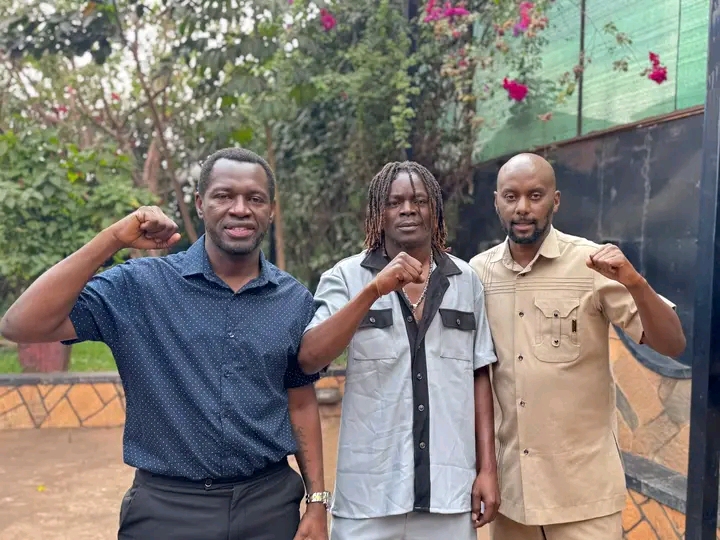
To a base that has been beaten, arrested, and denied space, any sign of “privilege” is read as proof of collusion.
The thinking goes: If the state lets you use Kololo, then the state owns you.
Some opposition activists now believe Saha could be more than an establishment-connected musician.
They believe he could be a mole.
The theory is not necessarily that Saha was secretly planted into NUP yesterday.
The more sophisticated version is that he could be gradually emerging as an alternative political personality capable of attracting the same young, urban and music-loving constituency that helped turn Bobi Wine into Uganda’s most prominent opposition figure.
In this theory, Saha’s greatest asset is not his music.
It is his credibility within opposition circles.
A person suspected of being an NRM operative would be useless if everyone knew he was one.
The entire theory of infiltration depends on trust.
That is why his presence around NUP figures matters to his critics.
That is why photographs matter.
That is why political appearances matter.
And that is why the question of his relationships matters.
The allegation made by TikToker Dero 1 goes further, claiming that government interests are deliberately building a “King Saha force” to challenge Bobi Wine.
And this allegation has tapped into an existing fear inside the opposition: that the regime could attempt to manufacture alternative voices rather than confront the most powerful opposition voices directly.
THE REAL DANGER FOR NUP
Perhaps the greatest danger is not that Saha is a mole.
The greatest danger is that NUP does not know whether he is one.
A political organisation that cannot distinguish between an ally, an independent actor and an infiltrator eventually loses trust in everybody.
And once that happens, the opposition begins fighting itself.
That is precisely why Saha’s case deserves serious scrutiny.
If he is innocent, a transparent examination of the facts should clear his name.
If there is nothing behind the allegations, the evidence should show it.
But if there is a coordinated political project behind his rise, the same investigation should expose it.
The answer cannot come from shouting “NRM project” louder.
It must come from evidence.
THE QUESTION THAT WON’T GO AWAY
For now, King Saha remains what he has publicly been: a musician, a major entertainment personality and a figure who has appeared in opposition political spaces.
But the circumstances surrounding him have created an extraordinary political paradox.
He appears close enough to the opposition to be trusted by some of its leaders.
He appears close enough to powerful establishment circles to attract suspicion.
He has a major concert at Kololo.
He has a family connection to Gen. Salim Saleh’s family.
He has been involved in political activity.
And now he has been at the centre of a dramatic security incident in Kyanja.
None of that proves he is an NRM mole.
But it does make one question unavoidable:
Is King Saha simply a musician caught in Uganda’s political crossfire — or is he the beginning of an establishment-backed attempt to manufacture a new force inside the opposition’s own backyard?
Until that question is answered with evidence, the suspicion will remain.
And in Uganda’s opposition politics, suspicion itself can become a political weapon.